Ever had someone correct you mid-sentence — “that’s not a hammock, a hammock is the swing seat on your grandma’s porch”? Yeah, we’ve heard it too. There’s a small but loud crowd who insist the word for the thing you sleep in between two trees should be anything but “hammock,” and who file “hammock” under “confusing double meaning.”
Let them. We say hammock because that’s what it’s called, it has history, and it feels right — and I’m going to show you why. Come along on a journey from the Caribbean to your forest, and let’s see if we can get you to join Team Hammock.
The start: the Taíno and their “hamaca”
We begin with the Taíno people of the Caribbean — think the Dominican Republic, Haiti, Puerto Rico — long before anyone dreamed of camping in a northern forest. They had the “hamaca”: woven nets of cotton or bark, first used for fishing or storage. Then they had a genius idea: string them up between trees and sleep like royalty off the ground, away from bugs and damp. That was the birth of the hammock, and “hamaca” was the starting gun for a world tour.
The Spanish took it: “hamaca” goes global
When Columbus and crew showed up in the 1490s, they were floored by these hanging nets. They borrowed both the idea and the word — “hamaca” became the Spanish word for a hammock and started sailing across the seas. Sailors loved it, and soon Europe was hooked. “Hamaca” wasn’t just clever — it was a game-changer for sleeping anywhere.
The English made it theirs: “hammock” takes shape
In the 1500s, English borrowed “hamaca” from Spanish, but of course it couldn’t leave it alone — it became “hammock.” The first time it shows up in writing is around 1550, used for hanging beds on ships — perfect for rocking with the waves. But here’s where it gets fun: the English also started calling their porch swings “hammocks,” and suddenly the word had two jobs. That’s where the “false twin” is born — same word, different meanings — and it’s a knot people have been tripping over ever since.
One word, two beds: the porch swing vs. the real thing
Here’s the rub: because English glued the word to both objects, some people picture a creaky cushioned swing on a deck the moment you say “hammock.” That double meaning makes it a false twin — a word that looks the same but plays two roles. “You mean the porch swing?” they ask, slightly smug. Fair. But to those of us who actually sleep between trees, “hammock” means one specific, glorious thing. And most of the world’s languages agree with us at the root — French hamac, Italian amaca, Dutch hangmat, German Hängematte — nearly all of them trace back to that same Taíno “hamaca.” We’re all speaking a little bit of Taíno without knowing it.
Why we say hammock — and why it’s right
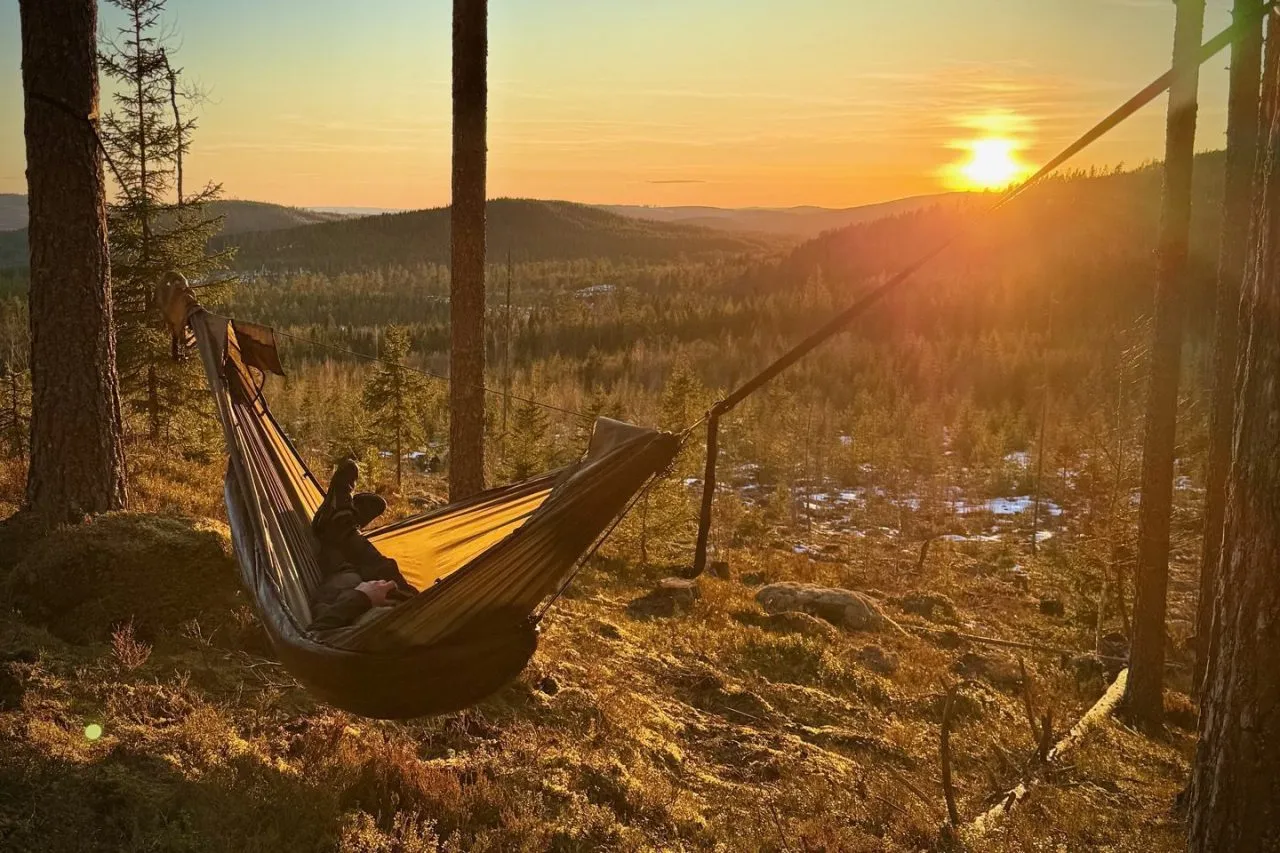
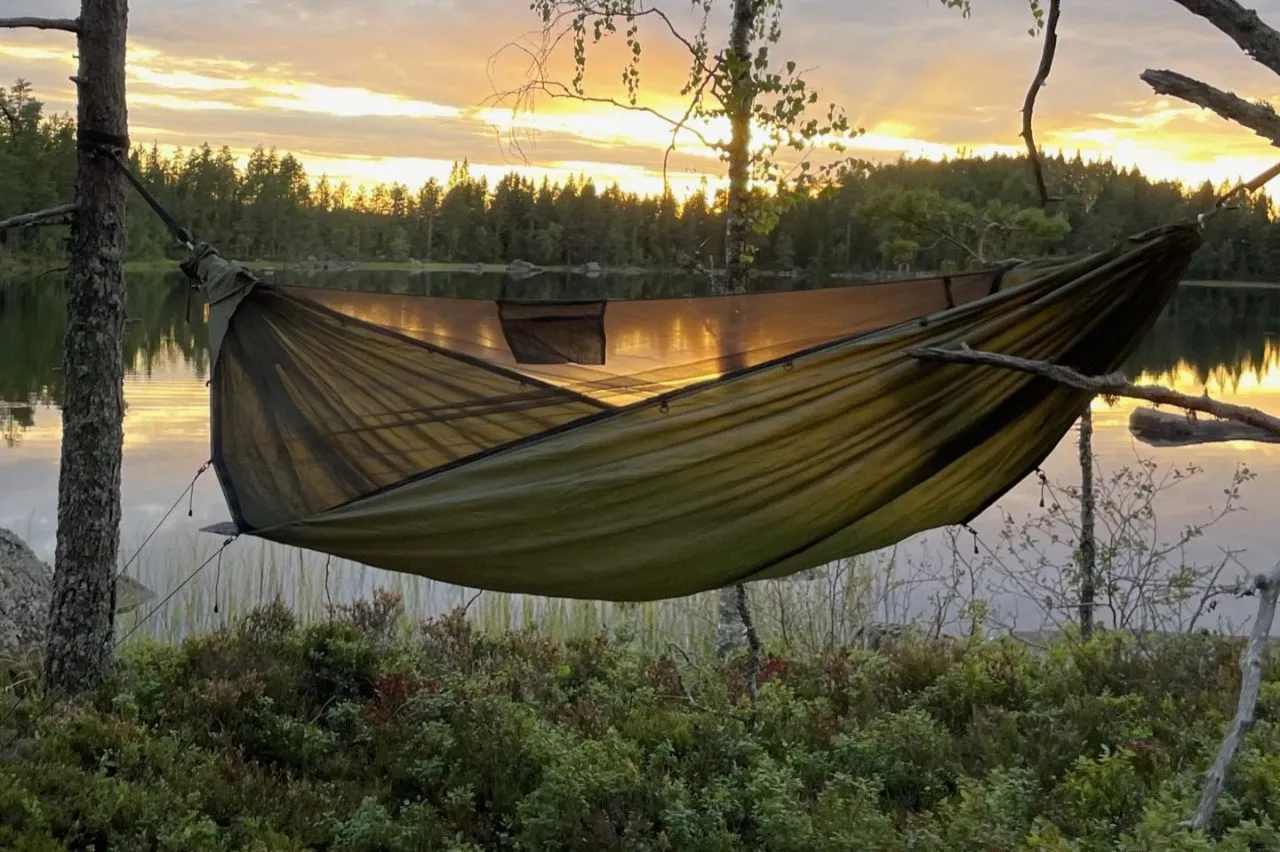
We hammockers say “hammock” because it carries a history bigger than any one country’s borders. From the Taíno “hamaca” to sailors’ ships and onward to your Momo Jord Hammock — it’s a word that has travelled the planet and landed in the forest with us. The porch-swing meaning is fine; let it have its deck. But when we say “hammock,” we don’t mean some dusty cushioned swing — we mean freedom, comfort, and a night under the stars. So yes, it’s a loanword — but it’s our loanword. And those of us who actually hang out between trees, we’re the ones shaping the language we use to talk to each other. What a few well-meaning but misinformed jokers think doesn’t bother us in the slightest — least of all when we’re out among the trees, while they hang around comment sections looking for something to be upset about.
A nerdy bonus — how far back does it go?
For those who love to dig deeper: some linguists think “hamaca” may have roots in an even older word for “net” or “weave” in the Arawakan language family the Taíno belonged to. We have no written proof that far back, but it’s wild to think your hammock may have started life as a fishing net thousands of years ago.
Team Hammock or Team Porch Swing?
So next time someone wrinkles their nose and says “you mean a porch swing,” give them a grin and this story. “Hammock” isn’t just a word — it’s a history, an attitude, and an invitation to something bigger. Quibble about double meanings all you like, but when you’re lying in your hammock and the wind rocks you to sleep, I don’t think you’ll care what the language police reckon. We’re Team Hammock all the way — jump on in, whatever you happen to call it.